Showing posts with label quote. Show all posts

Thursday, January 23, 2025

Cities and DEI - Quotes of the Day

 Quotes of the day! Cities and DEIA

Photo by SiravitPlug on Unsplash

Cities as hubs of innovation 

"In cities, we’re constantly interacting with people from diverse backgrounds, creating a web of social connections. These interactions drive us to adapt, learn, and grow."
–adigaskell.org, Urban Design Affects the Racial Biases We Develop

This quote resonates with my belief that cities are hubs of innovation and transformation. Their cosmopolitan nature—bringing together people from various cultures, mindsets, and experiences—creates fertile ground for new ideas and ways of thinking. For example, in history, Yokohama, Japan, was the only place where foreigners were allowed to reside. To this day, it remains a hub of innovation in Japan. Similarly, cities like New York, London, and Shanghai have emerged as centers of creativity and progress due to their cultural diversity.

DEI as means for improved organizational governance

"In the fourth week, the most junior, female member of the staff team said in a plenary session that she was aware of a conflict occurring in the group. The person chairing the session, the most senior, male government official on the lab team, declared, 'There is no conflict here!' The staff member was silenced, and over the remaining four weeks, she never, ever spoke in plenary again."
–Adam Kahane, Power and Love

This is an example of silencing, which highlights an important issue in diversity, equity, and inclusion (DEI) initiatives. The senior staff member, likely without realizing it, dismissed the concern with an offhand remark. This small moment caused a breakdown in communication and discouraged further contributions from the staff member. Addressing such situations isn’t about giving special treatment or prioritizing one group over another. It’s about fostering better communication and improving organizational dynamics, ensuring everyone feels heard and valued.

Monday, January 20, 2025

Embracing Complexity and Letting Go of Control

Embracing Complexity and Letting Go of Control


Sonja Blignaut, Ben Ramalingam, and Silvio Funtowicz share perspectives that weave together a common theme: the challenge of navigating complexity and the humility needed to do so effectively. Blignaut highlights that “constraints... create order,” suggesting that boundaries aren’t just limitations but tools that make chaos manageable. Ramalingam warns against oversimplification, cautioning us not to break apart a “complex mess” without appreciating how its parts are interconnected. This resonates with Funtowicz’s call to “abandon the idea that you can predict and control,” encouraging us to move away from a rigid, deterministic approach and embrace uncertainty and interdependence.

Together, these insights challenge the impulse to simplify complexity and instead invite us to value the unknown, seeing constraints not as barriers but as guiding frameworks for meaningful engagement.

"Constraints are one of the primary (if not the primary) ways that order is created." 
–Sonja Blignaut, Constraints in Complexity and the BART Framework

"‘Some of the greatest mistakes are made when dealing with a complex mess, by not seeing its dimensions in their entirety, carving off a part, and dealing with this part as if it were a complicated problem, and then solving it as if it were a simple puzzle, all the while ignoring the linkages and connections to other dimensions of the mess.’" 
–Ben Ramalingam, Aid on the Edge of Chaos

"you have to abandon this idea that you can predict and you can control"
Scientific Advice Mechanism, Silvio Funtowicz on Post-Normal Science Advice  


Friday, January 17, 2025

Hard Truths to Muddle Through Tough Times

Here are today's quotes. Once again, there seems to be an underlying theme of impending doom. Perhaps that's a bit of an extreme take—or perhaps not.

Yaounde, Cameroon - no real connection to the content here. I just liked the photo and wanted to share.


  1. Keith Payne, The Broken Ladder
    "When people escape an impoverished background, they, too, are gone forever in a sense. Even if they return, they think differently, speak differently, and even eat differently. A family member once told me she didn’t want to set up education funds for her children because people came back from college as atheists. And what good is increased earnings potential when compared to eternal damnation?"
    Goodreads

  2. Stuart Brown, M.D. & Christopher Vaughan, Play
    "When we stop playing, we stop developing, and when that happens, the laws of entropy take over—things fall apart. Ultimately, we share the fate of the sea squirt and become vegetative, staying in one spot, not fully interacting with the world, more plant than animal. When we stop playing, we start dying."
    Goodreads

  3. Li Yuan, China’s Police Are Preying on Small Firms in Search of Cash
    "The money grabs are a sign of just how financially desperate local governments are. The country’s housing market has unraveled. Income from land sales, which used to make up about a third of local government revenue, fell by nearly one-third last year from the peak in 2021, according to the finance ministry."
    The New York Times

  4. Washington Post, What Canada’s Carbon Pricing Ruling Says About the Global Struggle Against Climate Change
    "Climate action is rife with problems—from free riders to dissenting ideology, to science denialism, to domineering capital interests, and beyond." (i.e., it is a wicked problem)
    Washington Post

  5. Ruth Ben-Ghiat, Strongmen
    "On one issue, the strongman has been consistent: his drive to control and exploit everyone and everything for personal gain."
    Goodreads

Tuesday, January 14, 2025

Just the Quotes...

There was an old TV show from the 1950s or 1960s about a police detective called Dragnet. The main character, Detective Joe Friday, was known for his famous line: "Just the facts, ma'am." He used this phrase to steer his interviewees away from speculation or personal opinions and back to the point. Today, I will share "just the quotes," even though it’s Tuesday and not Friday.

Quotes


"the idea of shifting from one attractor to another. When we talk about participation in this way we are describing a social process by which people take action and others either reject it or move towards it. If it is resonant enough – which means that it must be appropriate, work, and be meaningful to people's lives – then it will act as an attractor. As we discovered in the last chapter, in order to change the dynamics of system, it is necessary to create alternative attractors – deeper underlying shifts in perceptions, relationships, and attitudes, to provide foundations for new points of convergence to emerge. Once these reach a critical mass, tipping points occur which allow a shift in the pattern of social relationships to a new attractor." (Danny Burns and Stuart Worsley, Navigating Complexity in International Development)

"In Frederick Douglass’ 1869 speech “The Composite Nation,” he defends Chinese immigrants and says that he believes we're going to become a multiracial, multiethnic democracy one day. For a former slave to be saying that is what makes America unique, and is equally part of America's story." (Anand Giridharadas, Ro Khanna Wants Progressives to Embrace Patriotism, Aspiration, and Experimentation)

"The spiritual journey involves going beyond hope and fear, stepping into unknown territory, continually moving forward. The most important aspect of being on the spiritual path may be to just keep moving." (Pema Chodron, When Things Fall Apart)

“If you do not understand your role in the problem, it is difficult to be part of the solution.”
– David Peter Stroh

“Addiction is finding a quick and dirty solution to the symptom of the problem, which prevents or distracts one from the harder and longer-term task of solving the real problem.”
– Donella H. Meadows

We have created trouble for ourselves in organizations by confusing control with order.”
– Margaret J. Wheatley

“Yet we act as if simple cause and effect is at work. We push to find the one simple reason things have gone wrong. We look for the one action, or the one person, that created this mess. As soon as we find someone to blame, we act as if we’ve solved the problem.”
– Margaret J. Wheatley

“There are no separate systems. The world is a continuum. Where to draw a boundary around a system depends on the purpose of the discussion.”
― Donella H. Meadows, Thinking in Systems

“We can't impose our will on a system. We can listen to what the system tells us, and discover how its properties and our values can work together to bring forth something much better than could ever be produced by our will alone.”
― Donella H. Meadows, Thinking In Systems: A Primer

“Let's face it, the universe is messy. It is nonlinear, turbulent, and chaotic. It is dynamic. It spends its time in transient behavior on its way to somewhere else, not in mathematically neat equilibria. It self-organizes and evolves. It creates diversity, not uniformity. That's what makes the world interesting, that's what makes it beautiful, and that's what makes it work.”
― Donella H. Meadows, Thinking In Systems: A Primer

“a system must consist of three kinds of things: elements, interconnections, and a function or purpose.”
― Donella H. Meadows, Thinking in Systems: A Primer


Sunday, January 12, 2025

The World Will Forever Seek to Mold

These quotes, while seemingly disparate, collectively explore themes of identity, power, and transformation—both personal and societal. Together, they form a narrative about how individuals and groups navigate systems of control and self-perception, often wrestling with forces that seek to define them, whether externally or internally.

Quotes


"Trying to change ourselves doesn’t work in the long run because we’re resisting our own energy. Self-improvement can have temporary results, but lasting transformation occurs only when we honor ourselves as the source of wisdom and compassion." (Pema Chodron, The Places That Scare You)

"the rightness of fascism does not depend on the truth of any of the propositions advanced in its name. Fascism is “true" insofar as it helps fulfill the destiny of a chosen race or people or blood, locked with other peoples in a Darwinian struggle, and not in the light of some abstract and universal reason." (Robert O. Paxton, The Anatomy of Fascism)

"That’s a very working-class attitude. I’m not comfortable with people with power. I’ve always been intimidated by people like deans. I let them push me until I come back too strong and ruin the relationship." (Alfred Lubrano, Limbo)

Pulling the Quotes Together


Compostion

Reflective

Within each of us lies a quiet pulse, an ancient rhythm that resists the sharp edges of control. As Pema Chodron reminds us, true transformation is not a war waged against our own being but a tender act of recognition—a bow to the wisdom already flowing through our veins. To force change, to resist our essence, is to fracture the harmony that sustains us. Only in honoring our nature do we step into the light of lasting growth.

Yet, outside this fragile sanctuary, forces conspire to reshape the soul. Robert Paxton paints a stark portrait of fascism, where identity is stripped of its tenderness and forged into a weapon. It speaks not to the truth of shared humanity but to a Darwinian anthem of supremacy. In this arena, transformation is no longer a personal journey but a violent march, a submission to the will of power cloaked in destiny’s name. Here, the self becomes a pawn, its wisdom silenced beneath the roar of collective struggle.

Alfred Lubrano’s voice carries the weight of resistance—intimate, raw, and imperfect. His discomfort with power, his instinct to yield until the moment of rebellion, mirrors the tension between submission and selfhood. It is the story of many who walk the line between deference and defiance, their hearts longing for respect yet bristling under the burden of imposed hierarchy. In his words, we hear the echo of a deeper truth: transformation falters when it rises only in reaction to oppression, untethered from the wisdom of self-awareness.

Together, these voices weave a tapestry of identity and power—of how we falter and rise, bend and break. They remind us that the world will forever seek to mold us, some hands gentle, others cruel. Yet our truest transformation lies not in the hands of others, nor in our defiance alone, but in the quiet courage to listen inward and honor the rhythm that has always been ours.

Analytical 

The first quote by Pema Chodron emphasizes the futility of resistance against one's own nature, highlighting the necessity of self-compassion and inner alignment for true transformation. This perspective suggests that sustainable change arises not from denying or battling who we are, but from embracing our inherent wisdom and compassion. It challenges the paradigm of self-improvement as a battle to be fought and instead frames it as a journey of acceptance and understanding.

In stark contrast, Robert Paxton's analysis of fascism portrays a worldview that weaponizes identity, positioning it as a tool for domination rather than self-realization. Fascism demands allegiance to a collective destiny, rooted in exclusion and competition, where power is justified not by universal truths but by the assertion of supremacy in a zero-sum struggle. This ideology corrupts the process of self and group understanding, replacing authentic growth with a rigid, combative identity that denies the inherent worth of others.

Alfred Lubrano's reflection bridges the gap between the internal and external struggles of identity and power. His discomfort with authority figures and the cyclical tension in his relationships reveal a deeply personal example of the dynamics explored in the other two quotes. On one hand, his working-class perspective reflects the struggle against external forces that impose definitions and expectations. On the other hand, his eventual "coming back too strong" mirrors the internal resistance Pema Chodron warns against—a reaction that may temporarily address imbalance but lacks the enduring transformation that comes from honoring one’s authentic self.

Together, these quotes tell a story of how individuals and societies grapple with power and identity. They warn against the dangers of denying our own nature, succumbing to ideologies that seek to exploit identity, and reacting to power in ways that perpetuate cycles of conflict. Instead, they invite us to seek transformation through self-awareness, compassion, and the rejection of systems—whether internal or external—that resist the truth of who we are. Only through this alignment can lasting growth and meaningful relationships flourish.

Saturday, January 11, 2025

January 11 - Some quotes and some journal articles of interest

Quotes

"The world is easier to navigate if you remember that people are governed by emotions, acting more often out of jealousy, pride, shame, desire, fear, or vanity than dispassionate logic. We act and react because we feel something. To discount this and listen superficially—or not at all—is to operate at a serious disadvantage." (Kate Murphy, You're Not Listening)

Most of your training should be below aerobic threshold. This approach lets you build aerobic volume while minimizing injury risk. (David Roche, When (And Why) to Train Below Aerobic Threshold | Trail Runner Magazine)


"Social revolutions are usually horrible times of great unrest and insecurity, but they are also historical watersheds that reset and potentially revitalize a nation." (Brian Walker, David Salt, Resilience Practice)

"This requires greater prioritization of behavioural and operational research, a discipline that gets scant coverage in academic circles but which encompasses systems analysis and modelling. It also requires greater value to be placed on synthesis as a tool in discovery because of its power to describe system-level behaviour. Often it is the simple solutions applied well that make the difference rather than new technologies." (nature.com, Take the Long View - Nature)

"Faith is a place of mystery, where we find the courage to believe in what we cannot see and the strength to let go of our fear of uncertainty." (Brené Brown, The Gifts of Imperfection)

"Draw yourself up to your full height and look your audience straight in the eyes, and begin to talk as confidently as if every one of them owed you money. Imagine that they do. Imagine that they have assembled there to beg you for an extension of credit. The psychological effect on you will be beneficial." (Dale Carnegie, The Quick and Easy Way to Effective Speaking)

Systems

"One starting point for identifying where to take action is to look at the chains of causalities and feedback loops to see where potential for action lies. Another is to explicitly locate alternative attractors within the system. These are likely to be points where there are counter-narratives to the dominant narratives – which appear to have some traction even on a very small scale. Participants will also need to look for where the strong energy seems to be in the system – narratives which excite or anger people and so on. The potential for change in a system often exists in the domains where there is a visible emotional response to issues." (Danny Burns and Stuart Worsley, Navigating Complexity in International Development) 

Journal Articles

Bridging the Gap Between Labour Unions and the Management Through Leadership Development Programs?

Merging Worklife Organizational Innovation and Educational Programs- Promoting Continuous Adaptations to the Global Economy

When Successful Action Research is not Legitimized as Scientific Contribution by the Central Sponsors: How can Morten Levin’s Three Pillars of Action Research Support the Arch of Research Collaboration between Large Public Organizations and Universities?

When Co-Generative Learning Met Co-Production and Co-Creation - On How Three Different Concepts Shaped “Samskaping”


Friday, January 10, 2025

Reflections on a Cold, Dark January 10

Happy January 10. Not much to add to today’s post other than the fact that it is winter—it’s cold, dark, and unmistakably the 10th of January.

Here are three of the nine quotes that popped up in my Reedwise feed today. For whatever reason, these ones spoke to me more than the others I chose not to share here. It’s interesting how often quotes on fascism appear in my feed and how frequently I’m drawn to them, sometimes even repeating ones I’ve posted before. Perhaps it’s a reflection of how I’m feeling about the times we’re living in? đŸ¤”

Quotes

"Fascism was an affair of the gut more than of the brain, and a study of the roots of fascism that treats only the thinkers and the writers misses the most powerful impulses of all."

– Robert O. Paxton, The Anatomy of Fascism

"Studies show that identifying other people’s social class really is child’s play for most of us."
– Keith Payne, The Broken Ladder

"Making my bed correctly was not going to be an opportunity for praise. It was expected of me. It was my first task of the day, and doing it right was important. It demonstrated my discipline. It showed my attention to detail, and at the end of the day it would be a reminder that I had done something well, something to be proud of, no matter how small the task."
– William H. McRaven, Make Your Bed

Wednesday, January 08, 2025

January 8: Wednesday

Just quotes today - and a photo.


Quotes

"Arguably the biggest threat to our national security today is our division and inability to cooperate. We don’t want to think we are already in our day after, but the assumption we can survive as a country while mired in our political wars is a dangerous complacency." (A.B. Stoddard, The Day My Father Scared America)

"Don’t preach and hope for ownership; implement mechanisms that actually give ownership. Eliminating the tickler did that for us. Eliminating top-down monitoring systems will do it for you. I’m not talking about eliminating data collection and measuring processes that simply report conditions without judgment. Those are important as they “make the invisible visible.” What you want to avoid are the systems whereby senior personnel are determining what junior personnel should be doing." (L. David Marquet and Stephen R. Covey, Turn the Ship Around!)

"One of the weakest links in the chain is the lack of resiliency built into homes. Building codes represent the minimum legal requirements for house construction and do not take extremes into consideration." (Plant News, As Climate Changes, the Way We Build Homes Must Change Too - PLANT)

"The novelist Thomas Mann noted in his diary on March 27, 1933, two months after Hitler had become German chancellor, that he had witnessed a revolution of a kind never seen before, “without underlying ideas, against ideas, against everything nobler, better, decent, against freedom, truth and justice." The “common scum" had taken power, “accompanied by vast rejoicing on the part of the masses." (Robert O. Paxton, The Anatomy of Fascism)

"Sometimes the best lesson learned on the battlefield was that of modesty, but modesty was not yet a virtue in Tenth Corps—audacity for audacity’s sake was." (David Halberstam, The Coldest Winter)

Monday, January 06, 2025

January 6, 2025: There's snow storming the Capitol today

Good morning, January 6. As I understand it, there’s a massive snowstorm in Washington today—by DC standards, at least. When I was a kid growing up there, nothing would have made me happier. Now that I’m in Colorado, I still love snow, but 12 inches hardly qualifies as a massive snowstorm.

Not much else to share today. Here are a couple of quotes—maybe three—and a photo of a beautiful spot not too far from here.


Quotes

"We are not required to believe that fascist movements can only come to power in an exact replay of the scenario of Mussolini and Hitler. All that is required to fit our model is polarization, deadlock, mass mobilization against internal and external enemies, and complicity by existing elites."
– Robert O. Paxton, The Anatomy of Fascism

"By deleting, distorting and generalizing, we inhabit our perceptions and interpretations of Reality."
– Shelle Rose Charvet, Words That Change Minds

"The best predictor of wanting to slash funding for welfare recipients is racial prejudice."
– Keith Payne, The Broken Ladder

Sunday, January 05, 2025

The Opposite of Faith Is Not Doubt, the Opposite of Faith Is Certainty

Good Day to You - Happy January 5th, 2025

I’m in a mindset right now where I just want to get organized—to gather people and work collectively around an issue. It sounds ambitious, maybe even lofty, but it feels necessary.

On a different note, I was thinking last night about my love for landscapes and cityscapes—whether it’s mountains, sprawling city skylines, or just the forms they take. Doing something with these, even something as simple as sharing a daily photo of my favorite landscape or cityscape, feels important to me. Maybe it’s time to start a daily post somewhere to capture and share those moments.

Yaoundé, Cameroon: Both City _and_ Mountains!


There’s definitely a connection between my interest in landscapes, the environment, and the idea of getting organized. It feels worthwhile to explore those links further.

Last night—or perhaps it was early this morning while I was waking up—I had an idea about organizing around a specific concern. I even came up with a name for the group. It was perfect—a term used to describe “them.” But now, I’ve completely forgotten what it was! Ha ha! Well, perhaps I will update this post when it occurs to me once again.

Quotes

On today's quotes

Loads of good strong quotes today that resonate with our headlines.

The Illusion of Certainty


Progress rarely unfolds on a smooth, predictable path. Systems, whether social, economic, or environmental, often cling to comfortable narratives, even when they're clearly failing. Recognizing these "uncomfortable truths" – acknowledging systemic biases, admitting past mistakes, or facing the reality of climate change – is the first, often painful, step towards meaningful change.

Certainty, in a world of constant flux, is an illusion. Adaptability, the willingness to learn, adjust, and course-correct, becomes paramount. This requires humility, recognizing the limitations of our knowledge and the potential for unforeseen consequences.

Status, whether social, economic, or political, exerts a powerful influence on our thinking and behavior. It subtly shapes our beliefs, biases, and the risks we're willing to take. Those desperate to maintain or elevate their status, clinging to power and privilege, often pose the greatest danger. Their actions, driven by fear and insecurity, can have devastating consequences for individuals and societies.  

True resilience stems from confronting denial, both individually and collectively. Shared narratives of the future, where diverse perspectives are valued and integrated, can foster a sense of collective responsibility and a shared commitment to overcoming challenges.

Democracy, at its core, demands active participation, critical thinking, and a willingness to engage in thoughtful compromise. It requires courage to challenge the status quo, to question entrenched beliefs, and to work towards solutions that benefit the common good.

Ultimately, progress hinges on our ability to embrace uncertainty, confront uncomfortable truths, and cultivate a culture of adaptability and shared responsibility.

Quotes

"Other research has shown that occupying a superior position also increases implicit bias." (Keith Payne, The Broken Ladder)

"This contrasting principle is known in systems terms as worse-before-better behavior. This means that long-term success often requires short-term investment or sacrifice." (David Peter Stroh, Systems Thinking for Social Change)

"you have to abandon this idea that you can predict and you can control" 
(Scientific Advice Mechanism, Silvio Funtowicz on Post-Normal Science Advice)

"What work means to people often has less to do with what tasks they are actually performing than with how they relate to and compare themselves to other people." (Keith Payne, The Broken Ladder)

"'In plainer terms,' Baumeister and Bushman write, 'it is not so much the people who regard themselves as superior beings who are the most dangerous but, rather, those who have a strong desire to regard themselves as superior beings.… People who are preoccupied with validating a grandiose self-image apparently find criticism highly upsetting and lash out against the source of it.'" (Lulu Miller, Why Fish Don't Exist)

"Democratic policymaking requires debate, demands compromise and involves critical thinking. It entails considering different viewpoints, anticipating the future, and composing thoughtful legislation." (Simon Gottschalk, The Infantilization of Western Culture)

"Information is the main key to breaking a state of denial. Scenario development in which the range of possible futures is examined and spelled out is one good way of engaging stakeholders in the process." (Brian Walker, David Salt, Resilience Practice)

""The most important thing I learned on Tralfamadore was that when a person dies he only appears to die. He is still very much alive in the past, so it is very silly for people to cry at his funeral. All moments, past, present, and future, always have existed, always will exist." (Kurt Vonnegut, Slaughterhouse-Five)

Saturday, January 04, 2025

The Rim to Rim (to Rim?) - Grand Canyon

A quick post today to share some quotes and mention the big adventure of the year: a Rim-to-Rim (and maybe even Rim-to-Rim-to-Rim) run/hike of the Grand Canyon!

In preparation for this grand adventure, I watched a fantastic video by the Hiking Guy that provided valuable insights. It was absolutely worth the full hour it took to get through—though, I’ll admit, I watched it in two sittings.


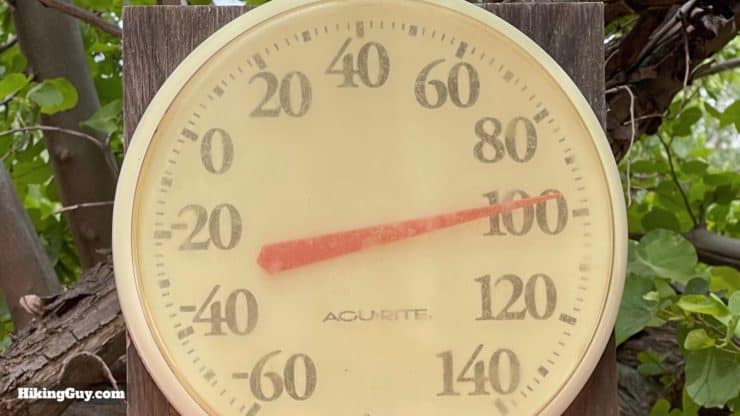
There are a couple of weather windows that are best for hiking from rim to rim. The main thing to avoid is the heat, which can be up to 120F in the shade. Hikers who venture out in the heat of the Grand Canyon die every year. This is real.

Quotes

"Sadly, in history, when these charismatic demagogues come to power, they use emotions to manipulate people. Trump says, "I love you" to his people. He told them he loved them on Jan. 6. He builds a personality cult so he poses as the victim, which is really important because not only are all his crimes presented as persecutions by the "deep state," but saying he's being persecuted makes his followers feel protective of him." (salon.com, “Empathy and Kindness Are for Weak People”: Why Trump Wants His MAGA Supporters to Be Cruel)


"Vision becomes a living force only when people truly believe they can shape their future." (David Peter Stroh, Systems Thinking for Social Change)

Friday, January 03, 2025

Quotes and Photos for January 3rd, 2025

 Quotes


"[...] crags and pinnacles of naked rock, the dark cores of ancient volcanoes, a vast and silent emptiness smoldering with heat, color, and indecipherable significance, above which floated a small number of pure, clear, hard-edged clouds. For the first time, I felt I was getting close to the West of my deepest imaginings, the place where the tangible and the mythical became the same."

"Fascist regimes functioned like an epoxy: an amalgam of two very different agents, fascist dynamism and conservative order, bonded by shared enmity toward liberalism and the Left, and a shared willingness to stop at nothing to destroy their common enemies." (Robert O. Paxton, The Anatomy of Fascism)

"The framers of our Constitution arranged things so that political action would have to be filtered through institutions that require consultation and compromise, and would depend on a system of frequent elections, checks and balances, the autonomy of the civil service, civilian control of the military, the writing of laws and regulations, and their impartial enforcement. And all this would have to be done at three levels of government." (Mark Lilla, The Once and Future Liberal)

"For months now, construction crews have been dynamiting, drilling, pumping, excavating and clear-cutting public land. In places like Guadalupe Canyon in far eastern Arizona, simply building roads to bring in construction equipment involved blasting mountainsides and sending the rubble down to clog drainages." (hcn.org, After Months of Border Wall Construction, a Look at the Damage Done)

"To really listen is to be moved physically, chemically, emotionally, and intellectually by another person’s narrative." (Kate Murphy, You're Not Listening)


Thursday, January 02, 2025

January 2nd, 2025 - Quotes

Good morning—hello, Thursday, January 2, 2025. I hope this day turns out to be exactly what it is meant to be. Of course, that might sound like a strange statement because, in truth, every day is precisely the day it is meant to be. Still, I can imagine that for some people, certain days are so difficult that it’s hard to believe those days were ever "meant to be." Out of respect for anyone experiencing such a hard day, I’ll simply leave it at that.

Below are some quotes from my Readwise stream that stood out for me.

Quotes

"There are, in fact, only two ways to beat the Curse of Knowledge reliably. The first is not to learn anything. The second is to take your ideas and transform them." (Chip Heath, Dan Heath, Made to Stick)

"One in nine people around the world depends on the money sent by migrants." (dandc.eu, In Countries of Residence as Well as Origin, Policymakers Should Engage With Migrant Communities)

"The time is very urgent – we must slow down." (Bayo Akomolafe, The Times Are Urgent: Let’s Slow Down • Writings – Bayo Akomolafe)

"The gorilla study illustrates two important facts about our minds: we can be blind to the obvious, and we are also blind to our blindness." (Daniel Kahneman, Thinking, Fast and Slow)

Wednesday, January 01, 2025

Happy 2025!

 Some quotes to start the year


Quotes

"Instead of falling all the way down to the bottom of his hierarchy, the awareness of his mortality actually heightened his own personal experience of transcendence. Noting a significant shift in values, Maslow observed: “The dominance hierarchy, the competitiveness and glory, certainly become foolish. There is certainly a shifting of values about what’s basic and what’s not basic, what’s important and what’s not important" (Scott Barry Kaufman PhD, Transcend)

"PUNCH LINE: Avoid burying the lead. Don’t start with something interesting but irrelevant in hopes of entertaining the audience. Instead, work to make the core message itself more interesting." (Chip Heath, Dan Heath, Made to Stick)

"Taiwan now accounts for roughly half of the global production capacity for all semiconductors and a much higher proportion—perhaps 90 percent—for the most advanced chips." (Andrew S. Erickson, The Taiwan Catastrophe)

"The researchers coded the videotapes to see what characteristics of the Chatters might be communicating their class differences. They found that richer Chatters were more disengaged during the conversation. They spent more time grooming themselves, doodling, and fiddling with pens, phones, or other objects. The poorer Chatters, in contrast, were more engaged. They looked directly at their conversation partner, and they nodded and laughed more. Higher status meant that the richer participants didn’t have anything “on the line” in the conversation. The poorer participants, in contrast, were working harder to be liked and accepted." (Keith Payne, The Broken Ladder)

Tuesday, December 31, 2024

Systemic Health: Reconnecting for Resilience and Belonging

The Story

Today's quotes brought this narrative forward.


Human systems—biological, social, and environmental—are held together by the flow of information and connection. As Donella Meadows highlights, the exchange of information is fundamental to how systems operate and evolve. When these flows are disrupted or misaligned, systems falter, revealing opportunities for intervention and growth.

Consider the connection between diet and health. Research into gut microbiomes, as reported by The New York Times, shows how individual choices, such as eating minimally processed foods, foster beneficial bacteria and support overall health. This small-scale system of inputs and outputs illustrates how seemingly minor adjustments can lead to profound shifts in outcomes, echoing the principles of systems thinking.

On a societal level, fostering resilience requires a similar approach: paying attention to the flows that sustain or undermine the system. As the IIED points out, “development as usual” fails to account for the interwoven risks of climate change. Only by mainstreaming climate resilience into development policies can countries reduce vulnerabilities and create sustainable pathways for growth.

However, these connections are not only practical but also deeply human. Erich Fromm reminds us that people gravitate toward connection—whether through religion, nationalism, or other shared systems of meaning—as a refuge from isolation. This drive to belong can either reinforce existing systems or inspire transformation when people seek more equitable ways to connect and thrive.

This insight resonates strongly in today’s world. An "epidemic" of loneliness is creating a void of connection that leaves individuals vulnerable to ideologies offering a sense of belonging, even when these ideologies reinforce harmful systems. As democratic backsliding and the rise of authoritarian leaders become more common, it becomes clear that isolation—both social and systemic—can foster a susceptibility to control. Authoritarianism often provides the illusion of unity and purpose, exploiting the human need for connection that Fromm describes.

In this context, strengthening systems of genuine connection—through equitable policies, resilient communities, and inclusive narratives—becomes not only a goal of governance but a bulwark against the isolation that fuels instability. By recognizing and addressing these vulnerabilities, we can rebuild systems that prioritize collective well-being over division, ensuring that the human need for connection fosters resilience rather than repression.

What can you do? 

Start by reconnecting with the people and organizations around you. Just as small dietary changes, like eating minimally processed foods, can improve your gut health, small social actions—joining local community groups, volunteering with grassroots organizations, or simply reaching out to neighbors—can improve the health of your social ecosystem. Building and nurturing these connections not only strengthens your personal sense of belonging but also contributes to a more resilient and inclusive society. These small steps ripple outward, helping to counter the forces of isolation and fostering systems of trust, collaboration, and shared purpose.

Quotes


"Many of the interconnections in systems operate through the flow of information. Information holds systems together and plays a great role in determining how they operate."
(Donella H. Meadows, Thinking in Systems)

"People who tended to eat minimally processed foods like vegetables, nuts, eggs and seafood were more likely to harbor beneficial gut bacteria."
(nytimes.com, How the Right Foods May Lead to a Healthier Gut, and Better Health)

"The most valuable lesson I’ve learned as a journalist is that everybody is interesting if you ask the right questions. If someone is dull or uninteresting, it’s on you."
(Kate Murphy, You're Not Listening)

"Meanwhile, there is growing consensus that ‘development as usual’ isn’t working: unless climate resilience is mainstreamed into development programmes and policies, countries risk increasing their vulnerability to climate change."
(iied.org, Framework Guides Local Governments Towards People-Led Climate-Resilient Development)

"Instead, for subordinates, the rejection of their society’s ideologies of subordination and even of the whole society may be necessary in order to facilitate positive group identity."
(Jim Sidanius and Felicia Pratto, Social Dominance)

"Religion and nationalism, as well as any custom and any belief however absurd and degrading, if it only connects the individual with others, are refuges from what man most dreads: isolation."
(Erich Fromm, Escape From Freedom)

Monday, December 30, 2024

First week of 2025 or last week of 2024

A warped view of an untidy street corner in Cape Town, S.A.

So, here’s the question: is this the first week of 2025 or the last week of 2024? It really depends on how you think about weeks, what day your week starts on, or simply how you choose to look at it. Since these are all just human conventions—and ultimately meaningless—the decision is up to you. Of course, we do have to coexist and interact with one another, but in the grand scheme of things, it doesn’t really matter. It’s a very minor point.

In other words, this is a lot of words to say almost nothing. But hey, it’s the beginning of a new year!

Today, I came across only one quote in my Readwise feed that stood out to me, which you’ll find below. As you can probably tell, I’m feeling especially creative today (not).

Quote

"People believed the workingman was getting shafted, and they seethed. Perceived societal breaks for minorities made the frustrated white guys of my world crazy." (Alfred Lubrano, Limbo)

Sunday, December 29, 2024

Quotes – December 29

 Let's see. Spend time writing about these quotes, or go for a run and a hike.

No competition.


Quotes

"One thing you may have noticed in the goals, is that they are more focused on routine and habits, than they are on outcomes." (cultivatedmanagement.com, Are You Chasing the Right Things? How to Paint a Picture for Your Life and Set Goals - Cultivated Management)

"foreign aid, even if given for purely humanitarian reasons, is political by nature precisely because it is not motivated by the search for profit." (Hannah Arendt, The Origins of Totalitarianism)

"(3) Human social systems are subject to the counterbalancing influences of hierarchy-enhancing (HE) forces, producing and maintaining ever higher levels of group-based social inequality, and hierarchy-attenuating (HA) forces, producing greater levels of group-based social equality." (Jim Sidanius and Felicia Pratto, Social Dominance)

"It is following these periods of crisis that institutions and the connections between them are most open to dramatic transformation." (Brian Walker PhD, Resilience Thinking)

"Her story — that of an uneducated, unskilled woman from farm roots who can’t find high-paying work in the city and falls deeper into poverty — is a familiar one, the classic pattern of in-country migration all around the world." (Abrahm Lustgarten, The Great Climate Migration Has Begun)

"There is a saying that the world is divided into people who think they are right." (Tara Brach, Radical Acceptance)


Systems Quotes

"One new area of investigation, for example, is how to understand and deal with multiple thresholds that occur at different scales in the ecological and social domains of linked systems, and which give rise to cascading regime shifts." (Brian Walker PhD, Resilience Thinking)

"The speed and magnitude of directional change, environmental and social, are now such that what is needed is continual transformational change in human-dominated systems." (Brian Walker, David Salt, Resilience Practice)

"In this sense, systems thinking is a disciplined approach for examining problems more completely and accurately before acting. It allows us to ask better questions before jumping to conclusions.

Systems thinking often involves moving from observing events or data, to identifying patterns of behavior overtime, to surfacing the underlying structures that drive those events and patterns. By understanding and changing structures that are not serving us well (including our mental models and perceptions), we can expand the choices available to us and create more satisfying, long-term solutions to chronic problems." (thesystemsthinker.com, Systems Thinking: What, Why, When, Where, and How? - The Systems Thinker)


Saturday, December 28, 2024

Power and the Role of Individuals in Navigating, Perpetuating, or Resisting Systemic Forces

The Power of the Individual in Systemic Forces

Societies are shaped by systems of power that influence how we think, act, and respond to challenges. Whether in governance, communication, or resilience, understanding the interplay between systemic forces and individual actions is essential. The insights from today’s quotes (see quotes below) provide a lens through which we can explore this dynamic.

Fascism and the Subtlety of Complicity

Robert O. Paxton, in The Anatomy of Fascism, emphasizes the importance of digging down to the level of ordinary people to understand how fascist regimes operate. “To understand fully how fascist regimes worked, we must dig down to the level of ordinary people and examine the banal choices they made in their daily routines.” These “banal choices” often seem insignificant—accepting a lesser evil, averting one’s gaze—but cumulatively, they enable monstrous outcomes.


This observation underscores a central truth: systemic forces thrive on the inertia of everyday actions. Fascist regimes, for example, depend on the demonization of an enemy to mobilize followers. Paxton writes, “Fascists need a demonized enemy against which to mobilize followers, but of course the enemy does not have to be Jewish. Each culture specifies the national enemy.” Recognizing this dynamic challenges us to question the narratives we unconsciously accept and the choices we make in response.

Communication and the Power of Concreteness

In Made to Stick, Chip and Dan Heath remind us of the importance of concrete language: “Concrete language helps people, especially novices, understand new concepts. Abstraction is the luxury of the expert.” This insight is critical when resisting systemic forces, as clarity can break through the fog of misinformation and propaganda that often sustains oppressive systems.

Concreteness is not just a teaching tool—it is a strategy of empowerment. When individuals are equipped with clear, actionable knowledge, they are better positioned to navigate and resist systemic pressures. Abstraction may serve experts, but for systems to change, ideas must resonate with those most affected by them.

Listening as Resistance

In a world that often prioritizes self-promotion, Kate Murphy’s reflection in You're Not Listening feels like a call to action: “In a culture infused with existential angst and aggressive personal marketing, to be silent is to fall behind.” Yet, listening can be a radical act. It shifts the focus from advancing one's agenda to understanding others’ realities.

Listening deeply—to voices marginalized by systemic forces, to ideas challenging the status quo—is a form of resistance. It is a way to question who holds power and to amplify perspectives that might otherwise be ignored.

Systems Thinking and the Critical Role of Transitions

Systems thinkers like Brian Walker and Bob Williams highlight the importance of examining moments of transition within systems. While Walker focuses on the 'back loop' periods—those brief, chaotic moments ripe for change—Williams brings attention to the role of power and decision-making within these transitions, particularly in determining what is prioritized or neglected within a system. Walker writes about the “back loop” periods—brief, chaotic moments where systems are ripe for change. “Almost no research has been done on systems in their brief, chaotic, but critically important back loop periods,” he notes in Resilience Practice.

Brian Walker and David Salt, in their exploration of resilience and systems thinking, delve into the intricate dynamics of change within linked ecological and social systems. They observe, “One new area of investigation, for example, is how to understand and deal with multiple thresholds that occur at different scales in the ecological and social domains of linked systems, and which give rise to cascading regime shifts.” These cascading shifts often emerge during transitional moments, providing individuals with unique opportunities to shape systemic outcomes. By identifying and understanding thresholds—those pivotal points where small actions can trigger significant changes—we can better navigate these critical periods and drive meaningful change.

The Question of Power

Finally, the issue of power is central to systems thinking. Williams and Hummelbrunner write in Systems Concepts in Action, “Systems thinkers began to question who makes those decisions of what is ‘in’ and what is ‘out’; the systems field formally started to address the issue of power.” Power shapes the boundaries of systems, determining which voices are heard and which are silenced.

As individuals, we must recognize where we hold power and where we can challenge its misuse. Whether through rejecting harmful narratives, using clear and concrete communication, or seizing moments of systemic transition, our actions matter.

The Cumulative Power of Individual Actions

Power operates at multiple levels—in regimes, systems, and individual choices. By understanding how systemic forces work and where individuals fit within them, we can navigate, perpetuate, or resist these forces more effectively. The challenge lies in recognizing the role we play in shaping outcomes, whether through what we accept, what we question, or what we choose to change. Even the most entrenched systems rely on the cumulative actions of individuals, and therein lies the potential for transformation. What one step will you take, no matter how small, to resist?


Quotes

"Fascists need a demonized enemy against which to mobilize followers, but of course the enemy does not have to be Jewish. Each culture specifies the national enemy."
(Robert O. Paxton, The Anatomy of Fascism)

"Concrete language helps people, especially novices, understand new concepts. Abstraction is the luxury of the expert. If you’ve got to teach an idea to a room full of people, and you aren’t certain what they know, concreteness is the only safe language."
(Chip Heath, Dan Heath, Made to Stick)

"To understand fully how fascist regimes worked, we must dig down to the level of ordinary people and examine the banal choices they made in their daily routines. Making such choices meant accepting an apparent lesser evil or averting the eyes from some excesses that seemed not too damaging in the short term, even acceptable piecemeal, but which cumulatively added up to monstrous end results."
(Robert O. Paxton, The Anatomy of Fascism)

"In a culture infused with existential angst and aggressive personal marketing, to be silent is to fall behind. To listen is to miss an opportunity to advance your brand and make your mark."
(Kate Murphy, You're Not Listening)

"Almost no research has been done on systems in their brief, chaotic, but critically important back loop periods."
(Brian Walker, David Salt, Resilience Practice)

"One new area of investigation, for example, is how to understand and deal with multiple thresholds that occur at different scales in the ecological and social domains of linked systems, and which give rise to cascading regime shifts."
(Brian Walker PhD, Resilience Thinking)

"systems thinkers began to question who makes those decisions of what is “in” and what is “out”; the systems field formally started to address the issue of power."
(Bob Williams, Richard Hummelbrunner, Systems Concepts in Action)

"In terms of the adaptive cycle (see chapter 4), this is classic K phase behavior in which we are increasingly locked into being more efficient with fewer strategies."
(Brian Walker PhD, Resilience Thinking)

Friday, December 27, 2024

Quotes for December 27, 2024

Nothing really to add today to these quotes I'm sure that we could painfully go through some process to find how they connect with one another and it would seem sharp and wise and the lake and I don't, or I shouldn't dismiss such fun work when it is being channeled. But right now that's not where my mind is.

*Update: I am being lazy. In adding labels/tags to this post I realized how much they have in common. To some degree. each quote weaves together insights into how we interact, make decisions, and share power, knowledge, and communication within societies. Together, they form a tapestry of ideas that challenge us to think about structures of democracy and how they lead to equity, collaboration, and resilience.

Quotes

"There can be no creative power without some acknowledgment of the other’s interests, just as there can be no healthy love if the self is wholly lost in concern for the other."
(Adam Kahane, Power and Love)

"According to the neoconservative position, because private firms are more subject to free market forces than are public firms and government agencies, one should expect less employment discrimination within the private sector than within the public sector. However, the empirical evidence offers no support whatsoever for this reasoning. As a matter of fact, whenever employment audits have been used to compare the discriminatory behavior of private versus public firms, private firms have been consistently found to display substantially higher rates of employment discrimination than public firms."
(Jim Sidanius and Felicia Pratto, Social Dominance)

"“if we (humanity) don’t find ways to become more comfortable with uncertainty, we have a big problem. Because it means that anyone who promises certainty will always have a following.”"
(Sonja Blignaut, Reconnecting With the Spirit of Exploration)

"Therefore, the behavior of complex adaptive systems is determined by both their internal structure and contextual relations. Change can be induced from the outside, but these contextual influences do not result in uniform, predictable output; as these external perturbations are ambivalent, they can be both disturbing and the source of further development. They are modified and rearranged in line with the system's internal state and structure. The resulting behavior can be explained neither by the external influences on the system nor by its internal states alone, but through the interaction of both. So having trust in self-organization is about paying attention for emerging patterns and responding to them."
(Bob Williams, Richard Hummelbrunner, Systems Concepts in Action)

"Abstraction makes it harder to understand an idea and to remember it. It also makes it harder to coordinate our activities with others, who may interpret the abstraction in very different ways. Concreteness helps us avoid these problems. This is perhaps the most important lesson that Aesop can teach us."
(Chip Heath, Dan Heath, Made to Stick)

"Far better than being first, Tellis and Golder concluded, is being what some have called a “fast second”: an agile imitator."
(Annie Murphy Paul, The Extended Mind)

Thursday, December 26, 2024

Power, Knowledge, and the Radical Act of Resolve

Together, these quotes explore how systems of power use tools like confiscation, rhetoric, and cynicism to
maintain themselves, and how disrupting these systems requires critical awareness (of power's mechanisms) and a refusal to succumb to despair—actively reclaiming agency and insisting on change.

Quotes

"Once in power, fascist regimes confiscated property only from political opponents, foreigners, or Jews."
(Robert O. Paxton, The Anatomy of Fascism)

"Because power is knowledge, and power above all else seeks to sustain itself, we can see that the rhetoric around development knowledge—‘like light’—is not just optimistic but also clearly wildly inaccurate."
(Ben Ramalingam, Aid on the Edge of Chaos)

"Optimism is a political act. Those who benefit from the status quo are perfectly happy with a large population of people who think nothing is going to get any better. In fact, these days, cynicism is obedience. What’s really radical is being willing to look right at the magnitude and difficulty of the problems we face and still insist that we can solve those problems."
(Sam Daley-Harris  Jan. 16, Transformational Advocacy and the Disobedient Self)