Showing posts with label running. Show all posts

Saturday, January 11, 2025

January 11 - Some quotes and some journal articles of interest

Quotes

"The world is easier to navigate if you remember that people are governed by emotions, acting more often out of jealousy, pride, shame, desire, fear, or vanity than dispassionate logic. We act and react because we feel something. To discount this and listen superficially—or not at all—is to operate at a serious disadvantage." (Kate Murphy, You're Not Listening)

Most of your training should be below aerobic threshold. This approach lets you build aerobic volume while minimizing injury risk. (David Roche, When (And Why) to Train Below Aerobic Threshold | Trail Runner Magazine)


"Social revolutions are usually horrible times of great unrest and insecurity, but they are also historical watersheds that reset and potentially revitalize a nation." (Brian Walker, David Salt, Resilience Practice)

"This requires greater prioritization of behavioural and operational research, a discipline that gets scant coverage in academic circles but which encompasses systems analysis and modelling. It also requires greater value to be placed on synthesis as a tool in discovery because of its power to describe system-level behaviour. Often it is the simple solutions applied well that make the difference rather than new technologies." (nature.com, Take the Long View - Nature)

"Faith is a place of mystery, where we find the courage to believe in what we cannot see and the strength to let go of our fear of uncertainty." (Brené Brown, The Gifts of Imperfection)

"Draw yourself up to your full height and look your audience straight in the eyes, and begin to talk as confidently as if every one of them owed you money. Imagine that they do. Imagine that they have assembled there to beg you for an extension of credit. The psychological effect on you will be beneficial." (Dale Carnegie, The Quick and Easy Way to Effective Speaking)

Systems

"One starting point for identifying where to take action is to look at the chains of causalities and feedback loops to see where potential for action lies. Another is to explicitly locate alternative attractors within the system. These are likely to be points where there are counter-narratives to the dominant narratives – which appear to have some traction even on a very small scale. Participants will also need to look for where the strong energy seems to be in the system – narratives which excite or anger people and so on. The potential for change in a system often exists in the domains where there is a visible emotional response to issues." (Danny Burns and Stuart Worsley, Navigating Complexity in International Development) 

Journal Articles

Bridging the Gap Between Labour Unions and the Management Through Leadership Development Programs?

Merging Worklife Organizational Innovation and Educational Programs- Promoting Continuous Adaptations to the Global Economy

When Successful Action Research is not Legitimized as Scientific Contribution by the Central Sponsors: How can Morten Levin’s Three Pillars of Action Research Support the Arch of Research Collaboration between Large Public Organizations and Universities?

When Co-Generative Learning Met Co-Production and Co-Creation - On How Three Different Concepts Shaped “Samskaping”


Saturday, January 04, 2025

The Rim to Rim (to Rim?) - Grand Canyon

A quick post today to share some quotes and mention the big adventure of the year: a Rim-to-Rim (and maybe even Rim-to-Rim-to-Rim) run/hike of the Grand Canyon!

In preparation for this grand adventure, I watched a fantastic video by the Hiking Guy that provided valuable insights. It was absolutely worth the full hour it took to get through—though, I’ll admit, I watched it in two sittings.


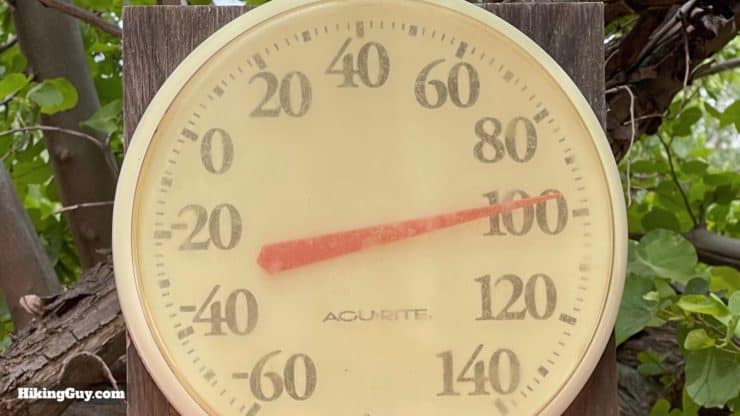
There are a couple of weather windows that are best for hiking from rim to rim. The main thing to avoid is the heat, which can be up to 120F in the shade. Hikers who venture out in the heat of the Grand Canyon die every year. This is real.

Quotes

"Sadly, in history, when these charismatic demagogues come to power, they use emotions to manipulate people. Trump says, "I love you" to his people. He told them he loved them on Jan. 6. He builds a personality cult so he poses as the victim, which is really important because not only are all his crimes presented as persecutions by the "deep state," but saying he's being persecuted makes his followers feel protective of him." (salon.com, “Empathy and Kindness Are for Weak People”: Why Trump Wants His MAGA Supporters to Be Cruel)


"Vision becomes a living force only when people truly believe they can shape their future." (David Peter Stroh, Systems Thinking for Social Change)

Saturday, March 03, 2007

Stretching

Interesting
clipped from pt.wkhealth.com
Two randomized studies[2,3] investigating the effect of stretching before the main exercise session concluded that this did not decrease injury risks. Regarding the reduction of delayed onset muscular soreness (DOMS), only one study observed reduction in soreness;[4] however, this occurred 72 hours after maximum eccentric knee flexion. Results from this study should be interpreted with caution because, not only did it take a long time for the beneficial effects to be noticed, but the sample size was also very small (ten females). Recent reviews[5-9] have suggested that stretching exercises do not protect against injury, nor do they diminish DOMS or enhance performance.
Various studies, with total stimuli duration varying from 120 to 3600 seconds, found that stretching exercises preceding the main strength activity significantly decreased performance.[10-30]
Decreases in strength ranged from 4.5% to 28%, irrespective of the testing mode
In contrast to these results, other authors[35-40] did not observe any detrimental effects of stretching on strength. The total stimuli duration in these studies was shorter, ranging from 30 to 480 seconds.

Flexibility and strength are fitness components that are fundamental in many sports modalities and even for common daily motor tasks. Training for flexibility and strength is widely recommended for those who wish to attain good fitness levels and a better quality of life. Many activities rely heavily on strength, but strength performance may be diminished by a preceding stretching routine; therefore, it is important to understand this phenomenon when prescribing physical exercise programmes. There appears to be substantial evidence suggesting a decrease in strength following stretching. Studies used different stretching techniques, duration and targeted different muscle groups, and were tested with isotonic, isometric or isokinetic devices. However, the number of exercises, duration of each exercise and number of sets (i.e. the total duration of stretching) was much longer than the ranges normally used in practice and what is recommended in the literature. This makes evident the need for further studies with designs that do not threaten their external validity. Training studies should also be conducted in order to assess whether the decreases in strength observed during the training session will have long-term consequences (i.e. suboptimal gains in strength when compared with training without prior stretching).

Furthermore, the safety of the participants should be taken into consideration in the recommendation of stretching exercises. When the possible effects of these exercises are analysed, it seems that many of the mechanisms responsible for maintaining the myo-osteo-articular integrity, such as muscle, tendon and joint receptors, are inhibited following stretching. Tolerance to pain also seems to be increased, allowing range of motion to be greater and closer to the maximal limit of the stretched structures, and consequently, closer to injury risk. The hypothesis that flexibility exercises preceding other physical activities may lead to greater injury risks should be considered and investigated in future studies.

Many mechanisms underlying stretching exercises still demand investigation so that links between the observed effects, their causes and consequences may be constructed.